Strategy. Innovation. Brand.
What Makes You Creative? Part 1

I’m smart but also naive.
What makes people creative? Can you exercise your creative “muscles” to become more creative?
I’ve read a lot trying to answer these questions. The best single source of answers I’ve found is Mihaly Csikszentmihalyi’s Creativity: Flow and The Psychology of Discovery and Invention. Csikszentmihalyi and his associates interviewed more than 100 people who had created fundamental changes in their domains.
After sifting and sorting the interviews, Csikszentmihalyi writes that the one word that best describes the creative personality is complexity. If you think of personality traits as continuums, creative people tend to show up at both ends. For instance, one continuum might run from energetic at one end to lazy at the other. Csikszentmihalyi observes that creative people are highly energetic and focused at some times but lethargic at other times. They can work very hard for extended periods of time but then “hibernate” to re-charge their batteries. Many interviewees noted that a daily nap is essential to their creative process.
Csikszentmihalyi identifies ten different pairs of opposing traits that occur commonly in creative personalities. Let’s look at three today. I’ll cover the rest in future posts.
Creative individuals have a great deal of physical energy, but they are also often quiet and at rest.
Creative individuals can work long hours while maintaining a high level of energy. According to Csikszentmihalyi, the most important aspect of this is that creative individuals can manage their energy levels more or less on their own. As Csikszentmihalyi writes, “When necessary they can focus it like a laser beam; when it is not, they immediately start recharging their batteries.”
Creative individuals tend to be smart, yet also naive at the same time.
How smart are they? Pretty smart but typically not geniuses. It seems that an IQ of about 120 is a dividing line. Up to 120, creativity seems to increase with intelligence. As IQ rises above 120, creativity seems not to increase much. Other factors are more important.
If intelligence (as measured by IQ) leads to convergent thinking – finding a well-defined answer to a well-defined problem – then naiveté leads to divergent thinking. Csikszentmihalyi defines this as “the ability to generate a great quantity of ideas…or the ability to switch from one perspective to another….”
An issue with divergent thinking is that it’s often difficult to distinguish a good idea from a bad idea. Several of Csikszentmihalyi’s respondents say that the main thing separating them from less creative individuals, is that they are better able to predict which problems are soluble and which are not.
A third paradoxical trait refers to the related combination of playfulness and discipline, or responsibility and irresponsibility. There is no question that a playfully light attitude is typical of creative individuals.
In Thinking Fast and Slow, Daniel Kahneman writes about the sheer joy of working with his colleague, Amos Tversky. They thought deeply – but differently — about the problems they studied and seemed to have a lot of fun.
As Csikszentmihalyi points out, doggedness is the necessary counterpart to playfulness. Being playful can get you started but it rarely gets you finished. Perhaps that’s why Edison said, “Invention is 1% inspiration and 99% perspiration”
Can these traits be taught? Can we become more creative? Within limits, I think so. I suspect that intelligence can’t be radically altered but certainly we can learn to be naïve. Divergent thinking is taught in most creativity workshops. Playfulness shouldn’t be that hard to learn. Doggedness may be a bit more difficult but, with the proper motivation, it too can be mastered. As for energy management … well, how hard is it to learn to take a nap?
(To read the other articles in this series, click here and here).
Thinking With Your Thumbs – Part 1

Do you bite your thumb at me, sir?
Can we think with our thumbs? Well, metaphorically we do. When we use System 1 — our fast, automatic, energy-efficient thinking system — we use heuristics, shortcuts to get to an answer that is “good enough”. We often refer to heuristics as rules of thumb — rough and ready ways to deal with reality. (For a comparison of System 1 versus System 2, click here).
Our rules of thumb work most of the time but not all of the time. Psychologists have classified 17 different errors that we make when we use System 1. Let’s look at three today.
Satisficing and temporizing are two errors that often go hand in hand. Satisficing simply means that when we find a choice that’s good enough, we take it and don’t search any farther. (The definition of “good enough” is entirely up to you.) Defense lawyers regularly accuse the police of satsificing. The accusation goes something like this: “You found my client and decided that he committed the crime. You stopped looking for any other suspects. You let the real criminal get away.”
Temporizing is similar to satisficing but adds a time dimension. You’re temporizing when you choose an option that’s good enough for now. How much education do you need? Well, let’s say that you can get a good job immediately with only a Bachelor’s degree. It’s good enough for now. But, 20 years from now you may not be able to get the promotion you want because you don’t have a Master’s degree. You may regret that you temporized in your younger years.
If you ever hear someone say, “if it ain’t broke, don’t fix it” you may well conclude that they’re either satisficing or temporizing. Whatever “it” is, it’s good enough for now.
Availability is another error category that we encounter often. When we’re asked a difficult question, we often search our memory banks for cases that would help us develop an answer. If we can recall cases easily, we tend to overestimate the probability that the same phenomenon will occur again. In other words, if the cases are readily available (to our memory), we tend to exaggerate their probability. This is especially true with vivid memories. This is one reason that people tend to overestimate the crime rate in their communities. Recent crimes are readily recalled — you read about them in the papers every day. Gruesome crimes create vivid memories — thus, many people think that gruesome crimes occur far more frequently than they do.
Available memories don’t have to be recent. In fact, vivid memories can last for years and affect our judgment and behavior in subtle ways. Indeed, I still go easy on tequila because of vivid memories from college days.
Satsificing, temporizing, and availability are three rules of thumb that help us get through the day. They’re part of System 1 which we can’t turn off, so we’re always vulnerable to these types of errors. In general, the benefits of System 1 outweigh the costs but you should be aware of the costs. If the costs are getting out of hand, it’s time to switch on System 2.
I drew primarily on two sources for composing this article. First, Peter Facione’s Think Critically. (Click here) Second, Daniel Kahneman’s Thinking Fast and Slow. (Click here).
Thinking: System 1 and System 2
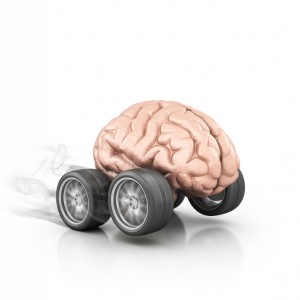
Think Fast.
Do you know how you think? It’s both simpler and more complicated than you might imagine.
It turns out that we have not one but two thinking systems. One is fast, automatic, and doesn’t require much energy. The other is slow, requires a lot of energy, and activates only when needed. Both systems are naturally good at grammar. Neither system is good at statistics.
Why do we need two systems? Because much of our life is filled with routine. Rather than using our slow, energy-hungry system to deal with routine matters, we’ve developed a fast, energy-efficient system to handle daily activities. That’s why we can drive 50 miles and not remember any of it. That’s why we can enjoy a walk in the park while our mind is in some other universe — being creative no doubt.
Notice, however, that what’s routine to one person is exotic and complicated to another. What’s routine to an airline pilot would be complicated, confusing, and downright scary to me. We train our fast, energy efficient system with our experiences. As we gain experience, more things become routine. We can do more things on auto-pilot, while turning over the creative thinking to our energy-hungry system. That may be why Earl Weaver, former manager of the Baltimore Orioles, titled his autobiography, It’s What You Learn After You Know It All That Counts.
Psychologists have named our two thinking systems — rather prosaically — System 1 and System 2. System 1 is fast and always on. You can’t tun it off. System 2 engages at various times — especially when System 1 encounters something out of the ordinary.
System 1 knows the “default” value — if everything is routine, just select the default action. To select something other than the default value, you typically need to fire up System 2. In Thinking Fast and Slow, Daniel Kahneman tells a story about parole boards in Israel. For parole judges, the default value is to deny parole. Judges have to find something positive and think through their position to approve parole. As a result, you’re much more likely to be approved for parole if your case is heard right after lunch. Immediately after eating, the judges have a lot of fuel for their brains and find it much easier to activate System 2. Thus, it’s easier to override the default position.
While System 1 is critical to our daily living, it’s also prone to specific types of errors. Indeed, psychologists have cataloged 17 different classes of System 1 errors. As we probe more deeply into critical thinking, I’ll provide an overview of all 17 and will delve more deeply into a few of the more common issues. Each time I review the list, I can recall a whole host of errors that I’ve made. Frankly, I’ll probably continue to make similar errors in the future. By understanding the types of errors I might make, however, I can check myself and maybe activate System 2 more frequently. As you read through the 17 types of System 1 errors, think about your own experiences. If you have good examples, please share them.
I drew primarily on two sources for composing this article. First, is Daniel Kahneman’s Thinking Fast and Slow. (Click here). Second, is Peter Facione’s Think Critically. (Click here)
Innovation, Persuasion, and Listening

I’m listening.
I struggle to be a good listener. When I’m engaged in an intense conversation, I’m often: 1) Framing my response; or 2) Thinking about a solution to the problem at hand. Of course, when I’m thinking about something else, I’m not really listening — I’m maneuvering. More importantly, I’m not being persuasive. If the other side thinks I’m not listening, they’re less likely to be persuaded to my point of view.
So I was pleased to find a recent McKinsey white paper by Bernard Ferrari titled “The Executive’s Guide to Better Listening”. (Click here). As Ferrari points out, “Listening is the front end of decision making.” If you want your company to be more innovative, you’ll need to make a number of critical decisions. If you’re a good listener, you’ll make better decisions and be more persuasive. That’s the best double play since Nellie Fox and Luis Aparicio.
So how do you become a good listener? Ferrari suggests three critical skills. First, show respect. Respect breeds confidence and trust. (This is essentially the same lesson that Greek rhetoric teaches — build trust first). If you’re a manager, you probably have a complex set of responsibilities. You can’t know everything about every facet of your domain. By respecting your teammates, you will naturally draw them into the conversation and learn from them. If you simply jump to a solution (as I sometimes do) you short circuit the entire process. Not only do you miss out on any advice about the current situation, you also teach your colleagues not to offer advice in the future. This doesn’t mean you should avoid incisive questions. Au contraire, the more the better to keep the conversation flowing.
Second, keep quiet. Ferrari suggest a variation of the 80/20 rule — let the other person speak about 80% of the time while you speak only 20% of the time. (This also works when you’re on a date — always encourage your partner to speak more than you do). This is a particularly hard one for me. I want to jump in and share my opinion because I know it’s … well, brilliant. But often times, I wind up answering the wrong question or chasing an irrelevant tangent because I’ve spoken too soon. As Ferrari notes, it’s important to take your time: “…if a matter gets to your level … it is probably worth spending some of your time on it.”
Third, challenge assumptions. This doesn’t just mean that you challenge other people’s assumptions. It also means that you encourage your colleagues to challenge your assumptions. As Ferrari writes, “… too many executives … inadvertently act as if they know it all … and subsequently remain closed to anything that undermines their beliefs.” Ultimately, “The goal is common action, not common thinking…” So, be explicit. Let your colleagues know that you don’t know everything and welcome their questions, especially the challenging ones.
I’ve found that it’s not easy to master these three skills. But when I do succeed, I learn more and, frankly, I have more fun. That makes me a better manager and a better teammate. And that makes my company more innovative.
Make a Brand Promise or Keep a Brand Promise?

I promise.
You have $10,000 left in your marketing budget. Should you use it to make a brand promise or to keep a brand promise?
It’s a tricky question and one that Bain & Company tries to answer in a newly released white paper. (Click here). As Bain points out, we often think of branding as a way to create an emotional attachment with a consumer. Bain suggests a different approach: we create brands to shift demand. With a strong brand, we may shift demand to higher prices or greater volume or, maybe, some of both.
As we build brands, we need to make brand promises. This often involves emotional advertising and direct marketing. On the other hand, for a mature brand in an established market, more advertising may deliver diminishing returns. Rather than shifting demand, we’re just spending money in a senseless arms race.
Bain gives four examples of fashion retailers that take very different approaches to brand promises. At one end of the spectrum, American Apparel and Benetton advertise heavily and often provocatively. In other words, they’re making promises. However, recent results — stagnant at best — suggest that they’re not keeping promises.
At the other end of the spectrum, Patagonia spends far less on advertising but has invested heavily in environmental causes. Patagonia’s strong word-of-mouth momentum focuses on promises kept. Similarly, the fashion retailer, Zara, does no advertising at all. Through smart locations, however, and short, fast production runs, they’ve built a strong company. The chatter about Zara also focuses on promises kept. For both Patagonia and Zara, the results have included faster growth and higher margins than almost all their competitors.
Bain argues that brand equity is really a brand’s power to shift demand. To illustrate, the authors review brand equity for 21 different product categories. (The research is based on discrete choice analysis, which I’ll describe in more detail in the near future). The research isolates different elements of the consumer decision — allowing us to compare the power of pricing, brand, and specific features. For MP3 players, for instance, the leading brand captures 38.5% of consumer choice based on brand alone. This compares to 13.9% for the second strongest brand. In other words, the leading brand was 2.9 times more powerful than the second brand in shifting demand.
Brands were powerful in both B2C and B2B categories. Many authors have suggested that brands are not as important in B2B categories — that B2B purchase decisions are not “emotional”. The Bain study suggests otherwise. As the authors write, “Companies have built strong brands even in … B2B … categories such as construction tools and medical devices. On construction sites, the loyalty to tool brands runs as deep as the passion that fashionistas demonstrate for their favorite jeans.”
Think about your brand — whether corporate or personal. Do you need to attract attention by making more brand promises? Or do you need to build loyalty by fulfilling brand promises? Either way, consider the power you have to shift demand simply by the way you behave.
My Social Media


