Strategy. Innovation. Brand.
Making Peace

I hear you.
I once saw a flight attendant defuse a quarrel between two passengers. She did it calmly, assuredly, and quickly. I couldn’t hear what she said but I could see the result – the two passengers seemed to make peace with each other.
Given the tenor of our times, the ability to make peace between two people (or two organizations) may well become a very valuable skill. It’s also a teachable skill. Here are the tips I’ve picked up in researching the topic.
Take a step back and a deep breath – you’ll want to slow things down and derail the rush to judgment. It’s likely that both parties are thinking in System 1 (and only System 1). You need to help them activate System 2 – that’s where the quarrel can be resolved. Ask both parties to think consciously about what’s going on. Asking each person to literally take a step backward can be a good starting point – it activates embodied cognition.
Clarify their intentions – saying, “I assume that both of you want to settle this amicably…” can help you clarify their intentions. It also activates their System 2 – they have to think about what they want. It can also help you identify obstacles to an amicable agreement.
Back away from the conclusion – System 1 is very good at taking partial information and jumping to a conclusion, often erroneously. Ask each person to describe the situation in his own words. Don’t interrupt and don’t allow the other person to interrupt. Then ask, “What do you conclude from this?” and “Do you think that’s a fair conclusion?” “Why?”
Climb the context ladder — Many quarrels result from an overly narrow focus; both parties frame the issue too tightly. They don’t see the context and history. Asking questions like “How did we get to this point?”, “Why do you think this happened?” can help them climb the context ladder and get a broader understanding of the issue.
Listen, rinse, repeat – both parties will want to know that their side has been heard and considered. Listen carefully and summarize what you’ve heard. (“So, what I hear you saying is…”). If one person keeps repeating the same point, she doesn’t feel that she’s been heard. Repeat the process as necessary.
Identify points of agreement – most disputes are not black and white; they also contain many shades of gray. The participants may not recognize that there are many points of agreement. In fact, there may be more points of agreement than disagreement. Be sure to point these out and ask each party to validate them.
Avoid assumptions – don’t assume that you know how the parties feel or what they want. Ask questions even when the answer seems obvious. Ask both parties to explain themselves fully, while the other party is listening.
Don’t play winners versus losers – you want an agreement that both sides can live with. There’s no point in identifying one person as a winner and the other as the loser. A person who is identified as a loser will likely see the entire process as biased and unfair.
Don’t make recommendations; draw them out — an arbitrator listens to both sides and renders a judgment (often with a winner and a loser). A mediator also listens to both sides but doesn’t render a judgment. Rather, your job is to draw out recommendations from the two parties. Be patient; this will take time. But, it’s worth it in the end. If the parties themselves recommend the solution, both sides are more likely to live with it.
Uncertainty, Risk, and VUCA

I’m just not certain.
Over time, I expect to write about all four elements of a VUCA environment – Volatility, Uncertainty, Complexity, and Ambiguity. Let’s start with uncertainty, which seems somewhat different from the other elements. With volatility, complexity, and ambiguity, we know something. With uncertainty, we don’t know something.
Uncertainty is often compared to risk. I wondered why uncertainty was included in VUCA while risk was not. After all, the two concepts are similar. But, as I’ve learned, risk is about knowledge while uncertainty is about lack of knowledge. As Michael Mauboussin explains, with risk we don’t know what’s going to happen but we do know the distribution of possibilities. Uncertainty is similar in that we don’t know what will happen. The difference is that we don’t even know what could happen.
Mauboussin uses games of chance to illustrate his point. In roulette, for instance, we don’t know which number will turn up but we can gauge the probability of each number. The same is true for most card games, dice games, etc. With uncertainty, however, we have little or no idea what the outcomes might be. We may assume that we know the range of possible outcomes but we really don’t.
As Nate Silver points out, you can put a price on risk but not on uncertainty. We know the odds of drawing to an inside straight and we can use that knowledge to bet to our advantage. We can’t bet effectively on uncertainty because we don’t know what the outcomes are or how they are distributed. Silver concludes, “Risk greases the wheels of a free-market economy; uncertainty grinds them to a halt.”
Even the Federal Reserve has weighed in on this question. An article published by the Federal Reserve Bank of Saint Louis explains:
“Although risk is quantifiable, uncertainty is not. Rather, uncertainty arises from imperfect knowledge about the way the world behaves. Most importantly, uncertainty relates to the questions of how to deal with the unprecedented, and whether the world will behave tomorrow in the way as it behaved in the past.”
Understanding the difference between risk and uncertainty can help us analyze contentious issues. The Iranian nuclear treaty may provide a good example. American political leaders who support the treaty view Iran as a rational actor. The country doesn’t want to commit suicide by initiating a nuclear war. The possible outcomes are known and we can judge their probability.
Leaders who oppose the treaty see Iran as irrational – much like North Korea. They see Iran as a messianic and extremist religious state that might well be willing to risk suicide to provoke Armageddon. Outcomes are not only unpredictable; they are unknowable. No treaty could possibly account for all possible outcomes.
Placing the Iranian treaty in the risk/uncertainty framework gives us additional tools to analyze the situation and refine our strategies. It gives us tips on what to look for. The fundamental question we’re trying to answer is simple: Is Iran a rational actor or not? I think we could develop a framework that would help us answer this question rationally rather than emotionally.
The Iranian treaty is, of course, a global issue. What if you encounter uncertainty in your personal or professional life? How can you assess the situation and improve your chances? More on that tomorrow.
I’m A Better Person In Spanish

Me llamo Travieso Blanco.
I speak Spanish reasonably well but I find it very tiring … which suggests that I probably think more clearly and ethically in Spanish than in English.
Like so many things, it’s all related to our two different modes of thinking: System1 and System 2. System 1 is fast and efficient and operates below the level of consciousness. It makes a great majority of our decisions, typically without any input from our conscious selves. We literally make decisions without knowing that we’re making decisions.
System 2 is all about conscious thought. We bring information into System 2, think it through, and make reasoned decisions. System 2 uses a lot of calories; it’s hard work. As Daniel Kahneman says, “Thinking is to humans as swimming is to cats; they can do it but they’d prefer not to.”
English, of course, is my native language. (American English, that is). It’s second nature to me. It’s easy and fluid. I can think in English without thinking about it. In other words, English is the language of my System 1. At this point in my life, it’s the only language in my System 1 and will probably remain so.
To speak Spanish, on the other hand, I have to invoke System 2. I have to think about my word choice, pronunciation, phrasing, and so on. It’s hard work and wears me out. I can do it but I would have to live in Spain for a while for it to become easy and fluid. (That’s not such a bad idea, is it?)
You may remember that System 1 makes decisions using heuristics or simple rules of thumb. System 1 simplifies everything and makes snap judgments. Most of the time, those judgments are pretty good but, when they’re wrong, they’re wrong in consistent ways. System 1, in other words, is the source of biases that we all have.
To overcome these biases, we have to bring the decision into System 2 and consider it rationally. That takes time, effort, and energy and, oftentimes, we don’t do it. It’s easy to conclude that someone is a jerk. It’s more difficult to invoke System 2 to imagine what that person’s life is like.
So how does language affect all this? I can only speak Spanish in my rational, logical, conscious System 2. When I’m thinking in Spanish, all my rational neurons are firing. I tend to think more carefully, more thoughtfully, and more ethically. It’s tiring.
When I think in English, on the other hand, I could invoke my System 2 but I certainly don’t have to. I can easily use heuristics in English but not in Spanish. I can jump to conclusions in English but not in Spanish.
The seminal article on this topic was published in 2012 by three professors from the University of Chicago. They write, “Would you make the same decisions in a foreign language as you would in your native tongue? It may be intuitive that people would make the same choices regardless of the language they are using…. We discovered, however, that the opposite is true: Using a foreign language reduces decision-making biases.”
So, it’s true: I’m a better person in Spanish.
How To Kill The Lottery

Great idea!
I’ve reached the conclusion that Americans actually enjoy paying taxes. While that may seem counter-intuitive, I see it happen every time I gas up my car. In the gas station, I usually see at least two or three people (often many more) lined up to pay their taxes. They don’t seem grumpy like they do at the DMV. Rather, they seem eager to plunk down their money to help support the American way of life.
It’s the lottery, of course. Or rather, the lotteries. I’ve just read (in The Atlantic) that Americans spent $70.1 billion on state and regional lotteries in fiscal year 2014. By comparison, we spent roughly $30 billion on the federal gasoline tax, $17.8 billion on sports tickets, $14.6 billion on books, and $13.1 billion on video games. (I was pleasantly surprised to learn that we spent more on books than video games).
On a per capita basis, we spent $280 per person on lotteries in 2014. If we exclude children from that number, the figure rises to about $300 per person.
Who is spending that money? Poor people account for a disproportionate share. According to a study by Elizabeth McAuliffe, the poorest third of Americans buy more than half of all lottery tickets. The Washington Post ran the numbers and estimates that “…households making less than $28,000 a year are dishing out $450 a year on lotteries.” In other words, poor people are paying about 50% more than average people.
Lotteries have essentially addicted state and local politicians. People willingly play them, no well-organized lobby opposes them, and they raise oodles of cash with minimal bureaucracy. So, can we ever change this system?
Actually, there may be hope in the form of prize-linked savings accounts (PLSAs). Some smart people asked the question, “Why don’t poor people save more money?” An important part of the answer seems to be that people believe that they’ll never get ahead by putting their money in small savings accounts. By comparison, a lottery offers some hope of getting ahead – not much but more than a small savings account. In other words, it’s a rational choice.
So, why not add lottery-like features to saving accounts? Presto! It’s the PLSA. Like any other savings account, a PLSA offers interest. In a PLSA, however, a good chunk of that interest is swept into a lottery and awarded as prizes. If you win the prize, then bully for you – it’s like winning a lottery. If you don’t win the prize, then you still have the money in your account plus (usually) a small amount of interest. It’s a lottery with virtually no downside.
Does it work? According to Wikipedia, various forms of PLSAs are now available in at least 17 countries. In the United States, Michigan’s Save To Win program enrolled 36 credit unions and gave away prizes based on random drawings. By saving more, participants could increase their chance of winning. A study found that 56% of the participants had been non-savers prior to the program, 39% were considered asset-poor, and 44% had low-to-moderate household incomes. By 2010, participants had opened 16,833 accounts with an average balance of $1,673 or a total of $28.1 million. The program has now spread to Nebraska, North Carolina, and Washington.
Why don’t we have more PLSAs? In some states, it’s against the law – only the state can offer a lottery. In other cases, it’s probably just lack of awareness. If you think it’s a good idea, it’s time to talk it up.
(Though this idea is new to me, it’s not such a new idea. You can find out more about current Save To Win programs here. The Save to Win website is here. Peter Tufano, formerly of Harvard Business School, and now the Dean of the business school at Oxford, has written about it here. Stephen Dubner of Freakonomics fame has written about it here.)
Do Smartphones Make Us Smarter, Dumber, Or Happier?
So which is it?
Smartphones:
- Make you lazy and dumb.
- Make the world more intelligent by adding massive amounts of new processing power.
- Both of the above.
- None of the above.
Smartphones have an incredible impact on how we live and communicate. They also illustrate a popular technology maxim: If it can be done, it will be done. In other words, they’re not going away. They’ll grow smaller and stronger and will burrow into our lives in surprising ways. The basic question: are they making humans better or worse?
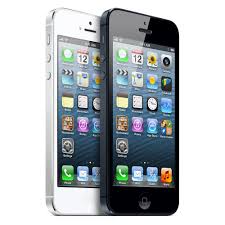
Smarter or dumber?
Researchers at the University of Waterloo in Canada recently published a paper suggesting that smartphones “supplant thinking”. The researchers suggest that humans are cognitive misers — we conserve our cognitive resources whenever possible. We let other people – or devices – do our thinking for us. We make maximum use of our extended mind. Why use up your brainpower when your extended mind – beyond your brain – can do it for you? (The original Waterloo paper is here. Less technical summaries are here and here).
Though the researchers don’t use Daniel Kahneman’s terminology, there is an interesting correlation to System 1 and System 2. They write that, “…those who think more intuitively and less analytically [i.e. System 1] when given reasoning problems were more likely to rely on their Smartphones (i.e., extended mind) ….” In other words, System 1 thinkers are more likely to offload.
So, we use our phones to offload some of our processing. Is that so bad? We’ve always offloaded work to machines. Thinking is a form of work. Why not offload it and (potentially) reduce our cognitive load and increase our cognitive reserve? We could produce more interesting thoughts if we weren’t tied down with the scut work, couldn’t we?
Clay Shirky was writing in a different context but that’s the essence of his concept of cognitive surplus. Shirky argues that people are increasingly using their free time to produce ideas rather than simply to consume ideas. We’re watching TV less and simultaneously producing more content on the web. Indeed, this website is an example of Shirky’s concept. I produce the website in my spare time. I have more spare time because I’ve offloaded some of my thinking to my extended mind. (Shirky’s book is here).
Shirky assumes that creating is better than consuming. That’s certainly a culturally nuanced assumption, but it’s one that I happen to agree with. If it’s true, we should work to increase the intelligence of the devices that surround us. We can offload more menial tasks and think more creatively and collaboratively. That will help us invent more intelligent devices and expand our extended mind. It’s a virtuous circle.
But will we really think more effectively by offloading work to our extended mind? Or, will we forevermore watch reruns of The Simpsons?
I’m not sure which way we’ll go, but here’s how I’m using my smartphone to improve my life. Like many people, I consult my phone almost compulsively. I’ve taught myself to smile for at least ten seconds each time I do. My phone reminds me to smile. I’m not sure if that’s leading me to higher thinking or not. But it certainly brightens my mood.
My Social Media


