Strategy. Innovation. Brand.
Branding: How to Name a Sports Car

Tarin or Parin?
You’ve just designed a spectacular, high-performance sports car. It’s beautiful. It handles like a dream. It turns heads. And it’s faster than anything else on the road. Now what do you name it?
Let’s assume that you want to emphasize the car’s speed in the name. Which name sounds faster to you: Tarin or Parin? Think about it for a moment and then read on.
According to researchers at Lexicon, a naming company in California, Tarin implies speed but less luxury. Parin, on the other hand, implies luxury rather than speed. The differences have to do with the pronunciation of the first letter. The initial “t” in Tarin is easy to pronounce — it’s quick like a fast car. The “p” in Parin requires more effort to build — like a luxury car.
“Fine”, you may say, “that works in English but the world is globalizing, so what about other languages?” Funny you should ask. The Lexicon researchers also studied the names in Japanese, Polish, Spanish, and Dutch and got essentially the same result. Pronouncing a “t” is easy and fast regardless of your native language.
This example comes from “Famous Names”, a terrific article by John Colapinto that appeared in The New Yorker. (click here). Unlike the old days, naming has become much more of a science. Linguists are studying how sounds evoke emotions and how those sounds might vary across cultures. Some tidbits from the article:
- Short brand names are better than long ones.
- Pronounceability is important. An unpronounceable name simply puts off prospective buyers. The easiest words to pronounce follow a consonant-vowel-consonant pattern like Amazon or Lipitor or Lexicon.
- Alliteration and assonance help a name sound more likable.
- The letters “c”, “v”, and “p” imply vigor and well-being. This is why the Lexicon researchers love the name of Honda’s Civic.
- The letter “b” is the most “reliable” in virtually any language. Hence the BlackBerry (which Lexicon named).
- The name shouldn’t focus on the product features but rather the story you want to tell about the product.
So here’s a fun game: take these guidelines and start inventing your own names. I often do this when I’m out for a walk. I just play with different letter combinations and, when I come up with something that sounds interesting, I write it down. I now have about 80 names on my “potentially useful” list. Some day, they may come in handy.
Brand Names – Defense
Yesterday, I wrote about playing offense by making brand names memorable, meaningful, and likable. That’s all well and good but how do you defend a good brand name once you’ve created it? As with offense, Kevin Lane Keller and others advise you to consider three variables:
- Transferability — can you use the name for brand or line extensions? Can you transfer it to new categories, including more luxe category or more economical categories? JuicyJuice is a good name for a line of juice drinks but probably doesn’t extend to colas or
 beers. Some names don’t have much meaning in and of themselves but become so closely associated with specific categories that they can’t be extended. Starbucks, for instance, originally could apply to almost anything but now has become closely associated with coffee. Would you buy wine from Starbucks? Similarly,we perceive Volkswagen to be a reliable, economical car. When VW introduced a luxury car, they called it the Volkswagen Phaeton. By all accounts it rivaled cars that cost twice as much. But it didn’t sell well. Great car; wrong brand. By contrast, when Toyota wanted to move up market, they didn’t transfer their own name. Rather they created a new name: Lexus. Similarly, when they moved to the youth market, they created another new name: Scion.
 - Adaptability — can you update or freshen the name? Will it grow stale? In the early days of the office automation industry, I remember a company named Cassette Powered Typewriters. They literally added memory cassettes to typewriters to make crude word processors. As their technology improved and as typewriters fell out of fashion, the company had to change its name to CPT. Naming after a time period can also create problems. What do we do with Twentieth Century Fox?
- Protectability — can you legally protect the name? Can anyone else copy the name? Perhaps in a different category? Perhaps in a different country?
Here’s where we start to see conflict between offense and defense. An entirely original, invented name is easier to protect. But an invented name usually has no inherent meaning, no emotional associations, and low likability. You have to teach the market what the name means, always an expensive proposition. It may score high on protectability but it’s probably low on memorability, meaningfulness, and likability.
It’s virtually impossible to create a name that scores well on all six criteria. So don’t feel badly if you don’t create a “killer” name after a few brainstorming sessions. If you need to build brand equity, you should probably focus on offense. If you need to maintain brand equity, you should probably focus on defense. Figure out your brand positions and then figure out which variables to focus on. Above all, help your customers imbue the name with emotion. It doesn’t matter what you think. It only matters what they think.
(This article is based largely on Kevin Lane Keller’s book, Strategic Brand Management).
Brand Names: Offense
 My clients often ask me to help them name things. They’re hoping that we can develop a name that plays equally well to logic and emotion and that states a compelling benefit in 15 letters or less. A lot of brains have been damaged this way.
Great brand names often trigger emotional responses. But we often get the cause and effect backward. The name doesn’t put the emotion in us. We put the emotion in the name.
I worked in college and scraped together enough money to buy a beat-up Pontiac Tempest. The original Pontiac was a great Indian leader in the midwestern United States. The town of Pontiac, Michigan was named after him. General Motors opened a factory there and named the car after the town. Originally, the name Pontiac didn’t mean anything more to me than, say, the name Cotopaxi. It’s just a name. Then I bought the car and enjoyed driving it. Now Pontiac has a special meaning to me, some sentimental value. The name didn’t do anything to me. I did something to the name. That’s why naming is so difficult. The name doesn’t trigger anything until customers add emotion to it.
As Kevin Lane Keller and many other branding experts have pointed out, you can play offense or defense with a name — but it’s hard to do both. Consider three variables for offense:
- Memorability — anything you can do to make your name memorable will help build your brand. This may mean playing off a well-known word — as in Lincoln cars or Winston cigarettes. Be sure to link to something that has positive connotations. Repetition also builds memorability which is why marketers repeat themselves so often.
- Meaningfulness — a good name may identify a product category, or some key product features, or a major product benefit. Be aware that changes in perception may require you to change your name. When fried food came to be viewed as unhealthful, Kentucky Fried Chicken decided to change its name to KFC.
- Likability — it’s hard to know what makes a name likable. You may pick a popular person’s name. Animals often provide better names than people do. It’s hard to hate an animal whereas it’s not so hard to dislike some people. The more abstract a product or service is, the more important it is to focus on a likable name.
It’s exceedingly hard to pick a name that has all three criteria. The trick is to not worry too much about it. Remember that a great name doesn’t create a great product. A great product creates a great name. Tomorrow we’ll talk about how to defend a great name.
(This article is based largely on Kevin Lane Keller’s book, Strategic Brand Management).
Democracies Surface Conflict
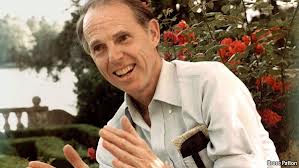 Roger Fisher died a few weeks ago. I wonder what he would have thought of today’s election.
Fisher wrote (with varying co-authors) Getting to Yes which pioneered the concepts of principled negotiation. The idea is simple: negotiations should lead to collaboration and compromise. Both sides should have a stake in the solution. One side shouldn’t have to “give in”. It shouldn’t be winner take all.
Fisher also pointed out that democracies surface dissension and conflict. In the introduction to the 3rd edition, Fisher argues, “Democracies surface rather than suppress conflict, which is why democracies often seem so quarrelsome and turbulent when compared with more authoritarian regimes. … The goal cannot and should not be to eliminate conflict. Conflict is an inevitable — and useful — part of life. It often leads to change and generates insight. … And it lies at the heart of the democratic process, where the best decisions result not from superficial consensus but from exploring different points of view and searching for creative solutions. Strange as it may seem, the world needs more conflict not less.”
We have a lot of dissension in America today. That doesn’t bother me. We should disagree. What disheartened me about the recent campaigns were the attempts to invalidate each other: “If you don’t agree with me, you’re not a real American.” “The Founding Fathers said X. If you don’t agree with my interpretation of what they said, you’re unAmerican.”
To me, statements like these are truly unAmerican. People who call others unAmerican are not trying to reason with the opposition or even to argue a point. They’re trying to suppress or eliminate the opposition. The argument goes like this, “If you’re not a real American, you have no standing. We don’t need to consider your views. You don’t count. We’ll do what we want. You’re nobody.” It’s insulting and demeaning to invalidate a fellow American. The American Dream says we all count.
The Founding Fathers said a lot of different things but what they created is a system that requires collaboration and compromise. The system of checks and balances actually works, except in the face of intransigence. As numerous historians have pointed out, the genius of the American system is our ability to compromise.
I’m not particularly loyal to either political party but I am loyal to the process. I like to argue because I think it’s the best way to reach agreement. I’m worried that we’re losing not just the ability to compromise but also the desire. That would be a tragedy. So, no matter who wins today, I hope we can spend less time invalidating each other and more time getting to yes.
(You can find Roger Fisher’s obituary here. You can find Getting to Yes here.)
Multitasking is a Myth

I can’t really do this.
I’ve never been able to pay attention to more than one thing at a time. I always assumed that this was a shortcoming on my part. I have friends who claim to be good multitaskers — attending to multiple projects and sources of information at the same time. I can focus on a task for hours on end but I’ve never been able to do two things at once. I always envied my multitasking friends.
Then last week, I attended a presentation by Bridget Arend, a professor of psychology at the University of Denver. Discussing how the brain works, she dropped an important tidbit: multitasking is a myth. People don’t really do two things at once. Instead, they are speedy serial task switchers. (Let’s call them SSTSers).
The best SSTSers can shift quickly from one target to another and focus intently on whatever target is in front of them at the moment. They focus intently and shift quickly. I think of expert trap shooters who can aim quickly at one clay pigeon, shoot it, and then — just as quickly — re-focus on another clay pigeon. They would never dream of aiming at two pigeons at once — it just doesn’t work. Perhaps we need to forget the old saying that we can kill two birds with one stone. It doesn’t happen. Believing it does only leads us astray.
This has important implications for communications. First, if you want to communicate to me, be sure you have my attention. If you walk into my office when I’m intently focused on my computer, you may not get my attention for a few minutes. It’s often a good idea to suggest that we go out for a cup of coffee — change the scenery, change the context, and allow me to re-focus. As Suellen can attest, I sometimes look straight at her and yet fail to hear anything she says.
Similarly, audiences don’t multitask well. You need a good introduction to grab their attention and get them to re-focus on you rather than whatever they were thinking about before. Some speakers love to show text-heavy slides while continuing to talk at normal presentation speed. They’re assuming that filling two channels — eyes and ears — will increase the impact. Actually, it’s just the opposite — the two channels cancel each other out. Sooner or later, each audience member attends to one channel or the other. Visual learners (a majority of us) tend to look at the slides while relegating you to oblivion.
This is also a good reason not to mention anything even remotely sexual in your speeches. Rest assured that sex is wildly more interesting than anything you’re talking about. If you mention sex, a good chunk of your audience will wander off on that track, never to return to your track. Sex is the ultimate serial task. Even the best SSTSers can’t switch quickly from that track to another. So, now that you’re thinking about sex, it’s time for me to sign off. I’m not going to get your attention back. See you tomorrow.
My Social Media


