Strategy. Innovation. Brand.
Innovation and the City

I’m looking for a connection.
Let’s say that the city of Groverton has 100,000 residents and produces X number of innovations per year. Down the road, the city of Pecaville has 1,000,000 residents. Since Pecaville has ten times more residents than Groverton, it should produce 10X innovations per year, correct?
Actually, no. Other things being equal, Pecaville should produce far more than 10X innovations. In predicting innovation capacity, it’s not the number of people (or nodes) that counts, it’s the number of connections. The million residents of Pecaville have more than ten times the connection opportunities of the residents of sleepy little Groverton. Therefore, they should produce much more than ten times the number of innovations.
In Where Good Ideas Come From, Steven Johnson makes the point that connections are the fundamental unit of innovation. The more connections you can make, the more likely you are to create good ideas. Scale doesn’t matter — more connections are better at a very small scale or a very large scale. This is where cities come in. In terms of innovation, larger cities have multiple advantage over smaller cities, including:
- There are more “spare parts” lying around — Johnson points out that most new ideas are created by combining — or connecting — existing ideas. Existing ideas are “spare parts” that an enterprising “mechanic” can assemble in new ways. (In an earlier post, I referred to this as mashup thinking. Click here.) Cities have more of everything, including more spare parts to fool around with.
- More information spillover — I know a lot about information science. If I keep it to myself, it doesn’t do a lot of good. If I share it with, say some sociologists, we might just come up with something useful. My information spills over to them and vice versa. In Johnson’s terms, the information I share becomes spare parts that the sociologists can plug into their framework. The question is: how likely am I to meet up with a bunch of sociologists? It’s much more likely in a big city than a small town.
- Not only are there more connections, the connections are more varied — if I mainly talk to people who are like me, the chances of something innovative happening are fairly low. It’s when I talk across boundaries — to people who aren’t like me — that interesting ideas begin to emerge. It may happen when I bump into a random sect of sociologists. But if it doesn’t happen then, well… maybe it will happen when I encounter an enclave of entomologists. Or maybe I’ll bump into a bevy of brewers who need to know about information science. In a big city, I’m likely to interact with many more disciplines, opinions, experts, and enthusiasts than I am in a small town.
Does this work in real life? Johnson provides some very interesting anecdotes. More recently, last Friday’s New York Times had an article (click here) on manufacturing and innovation. The article argues that more innovation happens when designers are close to the manufacturing floor. Why? Because of information spillover. Researchers claim that offshore manufacturing reduces our ability to innovate precisely because it reduces information spillover. Connectivity seems to work on the manufacturing floor as much as it does in big cities. Scale doesn’t matter. Bottom line: if you want to be more innovative, get connected.
Sunday Shorts

Pardon me while I unitask.
Interesting items I’ve discovered in the past week or so:
- Who’s the world’s most famous unitasker? It may well be Sherlock Holmes. When presented with a case, he didn’t multitask; he simply sat still and concentrated. It’s an example of mindfulness and meditation that can help us be more attentive, think “younger” and be more creative. For Maria Konnikova’s article, click here. For my recent article on multitasking, click here.
- If the bride is eight moths pregnant, should you mention the fact or pretend not to notice? In “Law and Disorder”, Jonathan Rauch argues that we would be better off if we would just mind our own business. It’s the difference between “hidden” law and “bureaucratic” law. Rauch’s essay is more than a decade old, but I just discovered it. You can find it here.
- Would the economy be better off without MBA students? That was the subject of a recent weeklong debate hosted by The Economist magazine. By a narrow margin — 51% to 49% — readers of The Economist agreed with the proposition — we would be better off without MBA students. Read why here.


Creatively Creating Creativity
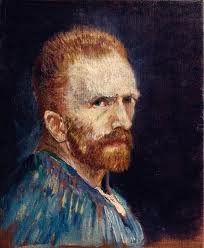
I alternate between fantasy and reality.
I recently wrote that Mihaly Csikszentmihalyi, in his book, Creativity: Flow and The Psychology of Discovery and Invention, identified ten different pairs of opposing traits that occur commonly in creative personalities. We looked at three pairs in that post (click here). Let’s look at three more today.
Creative individuals alternate between imagination and fantasy at one end, and a rooted sense of reality at the other. Csikszentmihalyi notes that Albert Einstein believed that both art and science “are two of the greatest forms of escape from reality that humans have devised.” To create new truths — to change the paradigm in Thomas Kuhn‘s phrase — one needs a great imagination, bordering on fantasy. At the same time, the creative person realizes that the fantasy could actually be true. The imagination extends well beyond reality but, sooner or later, reality catches up. Csikszentmihalyi also notes how artists respond to Rorschach tests. Creative artists tend to respond with more original and more detailed stories than “normal” people. But the artists rareley give “bizarre” answers as normal people sometimes do. Csikszentmihalyi concludes, “Normal people are rarely original, but they are sometimes bizarre. Creative people, it seems, are original without being bizarre. The novelty they see is rooted in reality.” Thus, it seems that it’s good to study reality so you can connect it to your imagination. Imagination disconnected from reality is simply bizarre.
Creative people seem to harbor opposite tendencies on the continuum between extroversion and introversion. Being truly creative requires a lot of time alone. You need solitary time to master your domain, to learn how to play the piano, or to write your magnum opus. Yet many of Csikszentmihalyi’s creative people said it was equally important to interact with other people and just kick ideas around. As Freeman Dyson puts it, “Science is a very gregarious business. It is essentially the difference between having this door open and having it shut.”
Creative individuals are also remarkably humble and proud at the same time. Highly creative people understand that they “stand on the shoulders of giants” — they first mastered their domain and then they extended it. Csikszentmihalyi points out that they also understand the role of luck in their discoveries and that they’re more focused on future work, making past work seem less boast worthy. At the same time, creative individuals realize that they have indeed created new forms and structures that genuinely make them proud. Csikszentmihalyi sees this duality as the contrast between competition and cooperation. To change your field (or to change the world), you need to be aggressive. “Yet at the same time, [creative individuals] are often willing to subordinate their own personal comfort and advancement to the success of whatever project they are working on.”
Click here for Csikszentmihalyi’s book. By the way, his surname is pronounced Six-Cent-Mihaly.
My Social Media


