Strategy. Innovation. Brand.
Sunday Shorts – 4
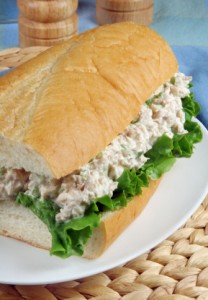
Is that Trazodone I taste?
Interesting things I’ve seen this week (even if they weren’t published this week)
What can pickpockets teach us about how our minds work? It’s simple: you’re not nearly as focused as you think. It’s easy to divert your attention and rob you blind. Click here for The New Yorker article.
What’s a phablet? You can find out by going to the Consumer Electronics Show or by clicking here. (Hint: it’s what happens when you cross a phone with a tablet).
And how about the Netherlands glow-in-the-dark highways? It’s another example of mashup thinking. Just mashup asphalt and phosphorescent powder. It absorbs solar energy during the day and glows at night. Now why didn’t we think of that? Really… why didn’t we? Click here.
What is City 2.0? We’re spending about $100 billion worldwide each year trying to find out. Maybe it’s not just smart gadgets. Click here.
Why wouldn’t you try to poison your husband by putting Trazodone pills in his tuna salad? Because the bitter taste would tip him off right away. One needs to be practical in these endeavors. Click here.
Should you stand or sit at work? Why isn’t lying down an option? Click here.
Would you rather be right or would you rather be president? Phillip Stephens writes that left-wingers used to be the ones who were too pure to make the compromises needed to govern. Now it’s the right wing — on both sides of the Atlantic. Click here.
The Big Hits of 2012

Is he speaking Swedish?
I created this website in 2011 to write about issues related to innovation, creativity, branding, strategy, organizational development, change management, persuasive communication, critical thinking, rhetoric and anything else about human affairs that seems interesting. I got serious about the site last May when I started my weekly newsletter. My goal is to write something interesting, useful, or just funny every business day. Each Wednesday, I send out a newsletter summarizing the week. I’ve been at it for 36 weeks now.
The new year seems like an opportune time to summarize my most popular posts from 2012. I’m still learning what’s popular and what’s not. I write 300 to 500 words per day and I love it when hundreds of people read what I’ve written. Here are the most popular posts in 2012. If you have suggestions for 2013, I’m all ears.
Developing a Habit of Innovation — five specific habits and modes of thinking that can help you be more innovative.
Branding: Why Buy Eyeballs That Won’t Buy? — many CEOs want their companies to become household names, even though most households will never buy their product. What’s the point of spending money to build mindshare if those minds are not going to buy?
90 Days of Anger — why do politics make us so angry? Because politicians want us to be angry. Anger motivates action better than any other emotion. If you’re angry, you’ll donate money, recruit friends, run telethons and so on. If you’re not angry, you’ll just sit on the couch. Politicians use attributed belittlement to make sure that you stay angry.
Culture Eats Strategy for Breakfast — let’s say that you need to change your company’s strategy. If you change it in ways that conflict with the corporate culture, the strategy is doomed to fail. When it’s culture versus strategy, culture always wins. Always.
Did Mitt Romney Read My Blog? — when should you not attack your opponent? When you know that your audience likes or admires or respects your opponent. If you launch an attack on a popular person (or product), you’ll look like the bad guy, not them. It’s the difference between a debate and a battle — you can read more about it here.
The Persuasive Future — one of my earliest posts (check out the sweater) and still one of the most visited. You’ll never win an argument in the past tense. Learn how to be more persuasive by shifting to the future tense.
Moderating the Extremes — your friend is absolutely convinced that she’s right and everybody else is wrong. How do you get her to listen to another point of view?
Multitasking Is A Myth — stop beating yourself up. You can’t really multitask. But you can do fast, sequential tasking. Sometimes you get stuck, however, which is why you should never mention sex in a speech.
Leadership and Motivation — who said, “When I realized that men were willing to die for bits of colored ribbon, I knew I could rule the world.”? And how does that make you a good leader?
Bring Your Husband to Heel — can you train your husband the same way you train a dog? Sure you can!
Innovation and Dogs — what can dogs teach us about innovation? Hold the leash lightly. (Bonus: a precious picture of our dog, Bella).
Christmas – Deadliest Day of the Year — why is Christmas the deadliest day of the year in the United States? Maybe it’s not because of what we do but rather how we think.
Are Older People Wiser? — it seems that they are. Why would that be? Because they forget stuff.
I should have said … — have you ever thought of a perfect comeback…hours after you needed it? Watch this.
Seduction — do you want to be more seductive? Of course you do. Here are six ways.
Strategy: What If Health Care Costs Go Down?

The telegraph will generate millions of jobs.
In the early 1990s, call centers were popping up around the United States like mushrooms on a dewy morning. Companies invested millions of dollars to improve customer service via well-trained, professional operators in automated centers. Several prognosticators suggested that the segment was growing so quickly that every man, woman, and child in the United States would be working in a call center by, oh say, 2010.
Of course, it didn’t happen. The Internet arrived and millions of customers chose to serve themselves. Telecommunication costs plummeted and many companies moved their call centers offshore. Call centers are still important but not nearly as pervasive in the United States as they were projected to be.
Now we’re faced with similar projections for health care costs. If current trends continue, prognosticators say, health care will consume an ever increasing portion of the American budget until everything simply falls apart. Given our experience with other “obvious trends”, I think it behooves us to ask the opposite question, what if health care costs go down?
Why would health care costs go down? Simply put — we may just cure a few diseases.
Why am I optimistic about potential cures? Because we’re making progress on many different fronts. For instance, what if obesity isn’t a social/cultural issue but a bacteriological issue? That’s the upshot of a recent article published in The ISME Journal. To quote: “Gram-negative opportunistic pathogens in the gut may be pivotal in obesity…” (For the original article, click here. For a summary in layman’s terms, click here). In other words, having the wrong bacteria in your gut could make you fat. Neutralizing those bacteria could slim down the whole country and reduce our health care costs dramatically.
And what about cancer? Apparently, we’re learning how to “persuade” cancer cells to kill themselves. I’ve spotted several articles on this — click here, here, here, here, and here for samples. Researchers hope that training cancer cells to commit suicide could cure many cancers in one fell swoop rather than trying to knock them off one at a time.
Of course, I’m not a medical doctor and it’s exceedingly hard to predict whether or when these findings might be transformed into real solutions. But I am old enough to know that “obvious predictions” often turn out to be dead wrong. In the late 1980s, experts predicted that our crime rate would spike to new highs in the 1990s. Instead, it did exactly the opposite. Similarly, we expected Japan to dominate the world economy. That didn’t happen either. We expected call centers to dominate the labor market. Instead, demand shifted to the Internet.
In the case of health care, it’s hard to make specific predictions. But a good strategist will always ask the “opposite” question. If the whole world is predicting that X will grow in significance, the strategist will always ask, “what if the reverse is true?” You may not be able to predict the future but you can certainly prepare for it.
Golf and Logic

Relax Elliot. It’s just a birdie.
Last week, I tweeted about the ability of golfers to make putts under different conditions. I claimed that even the best golfers have a loss aversion bias. Therefore, they’re more accurate when putting for par than for birdie. If they miss a par putt, they wind up with a bogey — a painful experience. If they miss a birdie, on the other hand, they often get a par — not so bad. The pain of getting a bogey is greater than the pleasure of getting a birdie. That’s pretty much the definition of the loss aversion bias.
Several of my friends who are golfers suggested that I don’t know what I’m talking about. For instance, my buddy Nick Gomersall wrote, “When you putt for a birdie you are more relaxed, nothing to lose and you stroke it in. Now when you putt for par you have negative thoughts as you think what happens if you miss and you put a bad stroke on it.” Nick is an excellent golfer and an all-round good guy but he’s wrong.
Here’s a link to a 2009 article on the topic, “Avoiding the Agony of a ‘Bogey”: Loss Aversion in Golf — and Business“. The authors, Devin Pope and Maurice Schweitzer, gathered data on 2.5 million putts taken in 239 PGA tournaments between 2004 and 2009. They note that “par” is an excellent divider between gain and loss. Better-than-par is a gain; worse-than-par is a loss. Loss aversion theory says losses are felt more deeply than gains. Thus, a bogey should bring more pain than a birdie brings pleasure. A golfer should try harder to avoid a bogey than to achieve a birdie.
And, that’s exactly what happens. The authors conclude, “…on average, golfers make their birdie putts approximately two percentage points less often than they make comparable par putts. This finding is consistent with loss aversion; players invest more focus when putting for par to avoid encoding a loss ….” Pope and Schweitzer used a number of statistical analyses to control for variables such as distance from the hole, the player’s overall skill, confidence, nervousness, and so on. The only explanation seems to be loss aversion.
Loss aversion is essentially an illogical bias. Why does it occur? According to Schweitzer, “”Loss aversion is the systematic mistake of segregating gains and losses — evaluating decisions in isolation rather than in the aggregate — and over-weighting losses relative to gains…”
Golf, it seems, can teach us a lot about business and finance. To avoid loss aversion, you need to look at the big picture. In golf, that means your position in the tournament rather than your position on the green. In investing, that may mean focusing on your entire portfolio rather than the gains or losses of an individual stock on an individual day. As Monty Python points out, “Always look on the bright side of life.”
Sunday Shorts – 3

Don’t feel blue. Do the stiletto workout.
Did you know that we’ve had 13 full moons in 2012? We had a blue moon in August. We’ll have another blue moon in about three years. What does that have to do with anything? Well, not much except that it’s the end of the year and I’m feeling a bit moony. Hope you have a good year in 2013. Here are some interesting things to read along the way.
Do bacteria cause obesity? We used to think that stress caused ulcers. Then we learned that it’s really a virus. Today, we believe that obesity is caused by overeating and lack of control. It’s a cultural issue or a psychological issue. But what if it’s just a bacteria? That’s the upshot of new research reported here. Maybe people get fat because of what’s in their gut rather than what’s in their brain.
It takes twenty years to build a reputation and twenty minutes to wreck it. Daniel Diermier probably knows more about reputation as a corproate asset than all the rest of us put together. Here’s what he says are the top ten reputational disasters of 2012. Be glad you’re not on the list.
So, your reputation suffers a disaster. What can you do about it? Well, the first thing is to learn how to apologize gracefully and completely. Here are some good and not-so-good ways to apologize to your customers. Though it doesn’t get much practice, Apple seems to lead the way in this category as well.
I’m about to teach a class on critical thinking so I was excited to find that Stephen Colbert has already recorded an excellent primer on critical thinking in Texas. You can find it here.
And for critical thinking about the future, here are five technologies to watch in 2013.
Enough about disasters and apologies. Here’s some good news. The global infant mortality rate has dropped from 88 deaths per 1,000 live births in 1990 to 57 deaths per 1,000 in 2010. That’s a decline of slightly more than 35%. It’s also an indication that numerous health care innovations are creating an important impact. Read about it here.
Finally, just in case you’re worried about staying in shape for the new year, here’s the stiletto workout. Feel the burn!
My Social Media


