
 Are you happy? Would that be “affective happiness” or “evaluative happiness”?
Affective happiness has to do with day-to-day life and emotions. It can go up or down quickly depending on how your day is going. Evaluative happiness is your overall evaluation of your life. How happy are you with your place in society? Think of it as overall life satisfaction.
So what makes people happy? I’m glad you asked since I’ve been reading the World Happiness Report. (For my earlier article on Gross National Happiness, click here. For the full Report, click here.) The Report summarizes surveys and statistics from around the world and develops some surprising conclusions about what contributes to evaluative happiness. Here’s a look at a few of the variables.
Income — you might think that richer people are happier. To a degree, you’re right — but income works in strange ways. First, richer people are generally happier than poorer people but the quest for higher income can reduce happiness. Second, as countries grow richer, they don’t necessarily grow happier. GNP per capita has risen threefold in the U.S since 1960, yet we’re not happier. That’s partially because happiness is tied more to relative income rather than absolute income. If we all get richer at more or less the same rate, then our relative positions don’t change — nor does our happiness. Third, there seems to be an income limit. Up to a certain level, income seems to increase happiness. Beyond that level, more income does not yield more happiness. Ultimately, differences in income explain about 1% of the variance in evaluative happiness.
Marriage – “Marriage is one of the unambiguous, universally positive and statistically significant correlates of life satisfaction.” But what’s the cause and what’s the effect? Does marriage make people happy or do happy people get married? It seems to be a bit of both. People who are happier when they’re young are more likely to get married. But marriage then gives a happiness boost — over and above the “normal” rate of happiness.
Age — as you get older, your body starts to break down physically and mentally. So you should be less happy, right? Not quite. There’s a big U-turn when you relate age to happiness. Other things being equal, we’re happier when we’re young and then happiness declines until we reach our 40s. Then things brighten up again and our life satisfaction rises. Could it be the wisdom of maturity? Maybe. Or maybe we can just afford better wine.
Gender — “In most advanced countries women report higher satisfaction and happiness than men.” This is less true in poorer countries but seems to be universally true in richer, more advanced countries.
Education — the evidence is mixed. More education doesn’t correlate directly with greater happiness. But it does contribute indirectly in that more education generally results in higher income which can create greater happiness.
Children — “Surprisingly, the presence of children in the household appears not to be associated with higher life satisfaction.”
Television — “Many studies have shown that watching TV is associated with lower happiness, other things equal. An early study exploited the fact that one Canadian town gained access to TV some years later than other towns. The result was a relative fall in social life and increased aggression.” Additionally, TV watchers see many rich people on the tube and tend to underestimate their own relative income. As we saw earlier, your perception of your income relative to others is what counts in happiness.
There’s much more to it — including mental health, freedom, corruption, equality, and community — but I think I’ll stop here for the moment. Does that make you happy?

It’s not so difficult.
Some years ago, Suellen and I were vacationing in England when we came across a tempest in a teapot in the local newspapers. It seems that a woman who was widely regarded as the best dog trainer in the country had written a book about husband training. Titled Bring Your Husband to Heel, the book suggested that training a husband was really not that different from training a dog. (Disclosure: I may have misremembered the book’s title. I can’t find it on the web.)
Letters to the editor in the local papers fell into three categories. The first group lamented, “This is terrible. It’s an insult to husbands.” The second group wrote, “This is terrible. It’s an insult to dogs.” The third group, which was composed only of women, wrote, “This is terrible. How dare she divulge our secrets?”
So what were the secrets? The essential advice was: Ignore bad behavior. Reward good behavior. As the author pointed out, dogs don’t really understand what they’ve done wrong, even if you tell them in a very loud voice. On the other hand, they do understand what it means to get a treat. If they need to behave a certain way to get a treat, then they’ll do it.
The secret to ignoring bad behavior is to not take it personally. With a dog, that’s easy. We usually don’t conclude that Fido is angry and vengeful just because he knocked over a lamp with a wagging tail. With a spouse, however, it’s harder. We may conclude that he or she is taking it out on us.
The author’s advice: get over it. Criticizing gets you nowhere. Telling a husband he’s messy doesn’t change the behavior. Besides, he probably already knew that. Telling him repeatedly doesn’t change the equation. So, ignore it and focus on rewarding the behaviors that you like. As “good” behaviors accumulate, they start to crowd out “bad” behaviors.
I was reminded of the book by one of David Brooks’ recent columns in the New York Times. Brooks tells the story of another Briton, Nick Crews, who wrote a letter telling his three grown children that they were “bitter disappointments” and he was sick and tired of them. The letter went viral (it’s known as the Crews Missile) and many parents, apparently, wished they had written it. As Brooks’ points out, however, “…no matter how emotionally satisfying these tirades may be, they don’t really work…. There’s a trove of research suggesting that it’s best to tackle negative behaviors obliquely, by redirecting attention toward different, positive ones.”
So the dog trainer apparently had it right. Want a better-behaved husband? Easy. Just give him treats.

I’m smart but also naive.
What makes people creative? Can you exercise your creative “muscles” to become more creative?
I’ve read a lot trying to answer these questions. The best single source of answers I’ve found is Mihaly Csikszentmihalyi’s Creativity: Flow and The Psychology of Discovery and Invention. Csikszentmihalyi and his associates interviewed more than 100 people who had created fundamental changes in their domains.
After sifting and sorting the interviews, Csikszentmihalyi writes that the one word that best describes the creative personality is complexity. If you think of personality traits as continuums, creative people tend to show up at both ends. For instance, one continuum might run from energetic at one end to lazy at the other. Csikszentmihalyi observes that creative people are highly energetic and focused at some times but lethargic at other times. They can work very hard for extended periods of time but then “hibernate” to re-charge their batteries. Many interviewees noted that a daily nap is essential to their creative process.
Csikszentmihalyi identifies ten different pairs of opposing traits that occur commonly in creative personalities. Let’s look at three today. I’ll cover the rest in future posts.
Creative individuals have a great deal of physical energy, but they are also often quiet and at rest.
Creative individuals can work long hours while maintaining a high level of energy. According to Csikszentmihalyi, the most important aspect of this is that creative individuals can manage their energy levels more or less on their own. As Csikszentmihalyi writes, “When necessary they can focus it like a laser beam; when it is not, they immediately start recharging their batteries.”
Creative individuals tend to be smart, yet also naive at the same time.
How smart are they? Pretty smart but typically not geniuses. It seems that an IQ of about 120 is a dividing line. Up to 120, creativity seems to increase with intelligence. As IQ rises above 120, creativity seems not to increase much. Other factors are more important.
If intelligence (as measured by IQ) leads to convergent thinking – finding a well-defined answer to a well-defined problem – then naiveté leads to divergent thinking. Csikszentmihalyi defines this as “the ability to generate a great quantity of ideas…or the ability to switch from one perspective to another….”
An issue with divergent thinking is that it’s often difficult to distinguish a good idea from a bad idea. Several of Csikszentmihalyi’s respondents say that the main thing separating them from less creative individuals, is that they are better able to predict which problems are soluble and which are not.
A third paradoxical trait refers to the related combination of playfulness and discipline, or responsibility and irresponsibility. There is no question that a playfully light attitude is typical of creative individuals.
In Thinking Fast and Slow, Daniel Kahneman writes about the sheer joy of working with his colleague, Amos Tversky. They thought deeply – but differently — about the problems they studied and seemed to have a lot of fun.
As Csikszentmihalyi points out, doggedness is the necessary counterpart to playfulness. Being playful can get you started but it rarely gets you finished. Perhaps that’s why Edison said, “Invention is 1% inspiration and 99% perspiration”
Can these traits be taught? Can we become more creative? Within limits, I think so. I suspect that intelligence can’t be radically altered but certainly we can learn to be naïve. Divergent thinking is taught in most creativity workshops. Playfulness shouldn’t be that hard to learn. Doggedness may be a bit more difficult but, with the proper motivation, it too can be mastered. As for energy management … well, how hard is it to learn to take a nap?
(To read the other articles in this series, click here and here).

Do you bite your thumb at me, sir?
Can we think with our thumbs? Well, metaphorically we do. When we use System 1 — our fast, automatic, energy-efficient thinking system — we use heuristics, shortcuts to get to an answer that is “good enough”. We often refer to heuristics as rules of thumb — rough and ready ways to deal with reality. (For a comparison of System 1 versus System 2, click here).
Our rules of thumb work most of the time but not all of the time. Psychologists have classified 17 different errors that we make when we use System 1. Let’s look at three today.
Satisficing and temporizing are two errors that often go hand in hand. Satisficing simply means that when we find a choice that’s good enough, we take it and don’t search any farther. (The definition of “good enough” is entirely up to you.) Defense lawyers regularly accuse the police of satsificing. The accusation goes something like this: “You found my client and decided that he committed the crime. You stopped looking for any other suspects. You let the real criminal get away.”
Temporizing is similar to satisficing but adds a time dimension. You’re temporizing when you choose an option that’s good enough for now. How much education do you need? Well, let’s say that you can get a good job immediately with only a Bachelor’s degree. It’s good enough for now. But, 20 years from now you may not be able to get the promotion you want because you don’t have a Master’s degree. You may regret that you temporized in your younger years.
If you ever hear someone say, “if it ain’t broke, don’t fix it” you may well conclude that they’re either satisficing or temporizing. Whatever “it” is, it’s good enough for now.
Availability is another error category that we encounter often. When we’re asked a difficult question, we often search our memory banks for cases that would help us develop an answer. If we can recall cases easily, we tend to overestimate the probability that the same phenomenon will occur again. In other words, if the cases are readily available (to our memory), we tend to exaggerate their probability. This is especially true with vivid memories. This is one reason that people tend to overestimate the crime rate in their communities. Recent crimes are readily recalled — you read about them in the papers every day. Gruesome crimes create vivid memories — thus, many people think that gruesome crimes occur far more frequently than they do.
Available memories don’t have to be recent. In fact, vivid memories can last for years and affect our judgment and behavior in subtle ways. Indeed, I still go easy on tequila because of vivid memories from college days.
Satsificing, temporizing, and availability are three rules of thumb that help us get through the day. They’re part of System 1 which we can’t turn off, so we’re always vulnerable to these types of errors. In general, the benefits of System 1 outweigh the costs but you should be aware of the costs. If the costs are getting out of hand, it’s time to switch on System 2.
I drew primarily on two sources for composing this article. First, Peter Facione’s Think Critically. (Click here) Second, Daniel Kahneman’s Thinking Fast and Slow. (Click here).
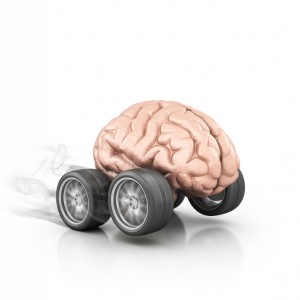
Think Fast.
Do you know how you think? It’s both simpler and more complicated than you might imagine.
It turns out that we have not one but two thinking systems. One is fast, automatic, and doesn’t require much energy. The other is slow, requires a lot of energy, and activates only when needed. Both systems are naturally good at grammar. Neither system is good at statistics.
Why do we need two systems? Because much of our life is filled with routine. Rather than using our slow, energy-hungry system to deal with routine matters, we’ve developed a fast, energy-efficient system to handle daily activities. That’s why we can drive 50 miles and not remember any of it. That’s why we can enjoy a walk in the park while our mind is in some other universe — being creative no doubt.
Notice, however, that what’s routine to one person is exotic and complicated to another. What’s routine to an airline pilot would be complicated, confusing, and downright scary to me. We train our fast, energy efficient system with our experiences. As we gain experience, more things become routine. We can do more things on auto-pilot, while turning over the creative thinking to our energy-hungry system. That may be why Earl Weaver, former manager of the Baltimore Orioles, titled his autobiography, It’s What You Learn After You Know It All That Counts.
Psychologists have named our two thinking systems — rather prosaically — System 1 and System 2. System 1 is fast and always on. You can’t tun it off. System 2 engages at various times — especially when System 1 encounters something out of the ordinary.
System 1 knows the “default” value — if everything is routine, just select the default action. To select something other than the default value, you typically need to fire up System 2. In Thinking Fast and Slow, Daniel Kahneman tells a story about parole boards in Israel. For parole judges, the default value is to deny parole. Judges have to find something positive and think through their position to approve parole. As a result, you’re much more likely to be approved for parole if your case is heard right after lunch. Immediately after eating, the judges have a lot of fuel for their brains and find it much easier to activate System 2. Thus, it’s easier to override the default position.
While System 1 is critical to our daily living, it’s also prone to specific types of errors. Indeed, psychologists have cataloged 17 different classes of System 1 errors. As we probe more deeply into critical thinking, I’ll provide an overview of all 17 and will delve more deeply into a few of the more common issues. Each time I review the list, I can recall a whole host of errors that I’ve made. Frankly, I’ll probably continue to make similar errors in the future. By understanding the types of errors I might make, however, I can check myself and maybe activate System 2 more frequently. As you read through the 17 types of System 1 errors, think about your own experiences. If you have good examples, please share them.
I drew primarily on two sources for composing this article. First, is Daniel Kahneman’s Thinking Fast and Slow. (Click here). Second, is Peter Facione’s Think Critically. (Click here)


