Strategy. Innovation. Brand.
Grover’s Weekly Reader – 1
The best articles I’ve found in the past week (or so):
 True progressivism — an economic agenda that reduces inequality while not stifling growth. A middle way that just might work. From The Economist. Click here.
The re-branding of Mitt Romney as Mitt the Moderate in the Financial Times. Click here.
Presenteeism — do people who show up at the office fare better than those who work at home? The Economist says they do. Click here.
Will universities get Amazoned? How online education could wreck the hallowed ivy halls. By Nicholas Carr, the man who wrote “IT Doesn’t Matter”. In Technology Review. Click here.
How Jesus’ wife found her man in The New Yorker — a very funny story. Click here.
Joe Biden and Me
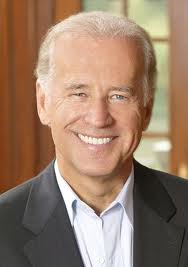
Hey buddy! How ya been?
I was teaching class last night so I missed the Biden-Ryan debate. It sounded like a doozy. Though I missed the fireworks, I did follow it on Intrade, the predictions market. Last week, before the Obama-Romney debate, Intrade predicted a 71% chance that Obama would be re-elected. During that first debate, the line fell to 66%, a clear indication that Romney was mopping up. Since then, the line on Obama fell gradually. Just before last night’s debate, Intrade predicted a 61% chance of re-election. I checked this morning and the line on Obama had inched up to 63%. So, it seems that Biden did what he needed to do — stop the “bed-wetting” and rally the base.
As it happens, Joe Biden and I have a connection. We both studied political science at the Univeristy of Delaware. Joe was a few years ahead of me; I knew of him though we didn’t travel in the same circles. I was a campus radical and he was more mainstream. He actually got a haircut from time to time.
At graduation, our paths diverged. He went to law school for three years and studied the finer points of the legal system. I went to Ecuador for three years and studied the finer points of Latin American politics.
Last year, our paths crossed in an odd way. At a cocktail party, I bumped into one of my favorite political science professors from Delaware. More than 30 years have passed since I took his class, but I remember it vividly. I complimented my old professor and told him how inspirational his class had been. He accepted my compliments and then asked:
Professor: “What grade did you get in the class?”
Me: “I was really motivated. I got an A.”
Professor (smiling): “Just so you know, Joe Biden got a C.”
So there you have it. If I had gone to law school, I could have been the veep. I may have missed that opportunity but I’m still hoping to be appointed ambassador to Ecuador. I could do some good there. Maybe we should start a social media campaign to get me appointed. As Joe would say, “Whaddya think?”
Persuasion: Ten Years and A Bag of Bagels
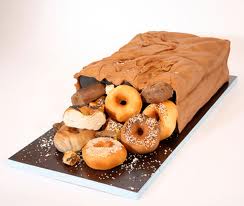
Still fresh after ten years.
As you prepare your persuasive presentations, you’ll probably use a lot of facts and data. You’ll want to marshall your evidence and create a powerful, logical, irrefutable argument. The trouble is, your audience will almost certainly forget your facts and data soon after you finish your presentation. What they’ll remember is the emotion.
Emotion is the basis of trust and trust is the basis of persuasion. If your audience trusts you, your arguments will be more persuasive. People remember their emotions much longer than they remember facts and data. If they trust you, they’ll probably continue to trust you. If they don’t trust you, they won’t change their minds unless you make a significant (and highly visible) change.
In the Persuasive Communication series, I focus mainly on what happens during your persuasive presentation. But what happens before and after can be equally important. Long before your presentation, you can build a sense of trust with your audience that will make your presentation much more persuasive. In fact, as you’ll see in the video, you can start the process years ahead of time. All it takes is a bag of bagels.
If It’s Not on the Internet, Does It Exist?
I like to read books. Lately, however, it’s making me feel old.

No longer relevant?
I recently submitted an article to an online magazine that I occasionally write for. I made what I thought was a provocative argument about tall buildings and mental illness. The gist of the argument is that people who live in tall buildings are often isolated from others and become depressed (or worse). The point: get out more often and mix it up with fellow human beings — it’s good for you. I based the argument on research published in 1977 in a book called A Pattern Language which is often described as a classic in the design literature. My son, the architect, recommended it to me. Despite its powerful provenance, my editors rejected the piece because they couldn’t find anything on the Internet to substantiate the argument.
So I went back to my copy of A Pattern Language, scanned the appropriate pages with the relevant citations, and sent them to the editors. They still rejected my article. As they pointed out, 1977 was a long time ago. Things may have changed. If the basis of the argument were still true, it should be somewhere in the Internet.
I’m now wondering what to do with all my old books. Should I toss them out? Are all my old Dave Barry books no longer funny? And Jorge Luis Borges — was he just a ficción of my imagination? I’m just now re-reading A Clockwork Orange — it’s the 50th anniversary. Should I just assume that it’s no dobby chepooka and brosay it into the merzky mesto? Wouldn’t that be horrorshow?
I’ve always wondered, how do we know what we know? Perhaps we can simplify the rules now and say, for something to be known, it must first appear on the Internet. That would simplify our lives — and our education systems. What’s your opinion? When does old information become irrelevant information?
By the way, I re-purposed my original article and published it here.
Why Is He Repeating Himself?

We’ve already been over that.
Over the past few days, we’ve talked about redundancy and repetition. Redundancy works if you need to make sure that a message sinks in fully. Ad agencies suggest that you need to repeat an advertisement to the same audience at least six times just to make sure that it’s noticed. (And, note that “noticed” is not the same as “understood”). Yet we also learned in information science that the more frequently a signal is repeated, the less information it carries. So redundancy works best when you can vary the signal while keeping the message the same. Volvo has done exactly that as they’ve built their brand. Volvo’s message is always “safety” but they deliver the message in many different ways.
What if a person keeps repeating himself? It could mean that he’s crazy. More likely, he thinks he hasn’t been heard. If he thinks you haven’t noticed and understood his message, he’ll continue to repeat himself — even to the point of being self-defeating. There’s a simple solution — just feed back what you’ve heard. You may have to do it more than once but, sooner or later, the person will acknowledge that he’s been heard — usually by nodding his head. Once you’ve established that the message was properly received, you can move on to new topics. Take a look at the video to practice the technique.
My Social Media


