

We need some face time.
Long ago, when I was a product manager at Solbourne Computer, we were trying to answer some nagging questions about our market. We built very fast symmetric multiprocessing Unix servers — back when symmetric multi-processing (SMP) was a brave new thing. In the early going, our machines were essentially hand built and we had difficulty meeting demand. As we worked our way down the manufacturing curve, however, we learned how to build machines more quickly. It soon became clear that we could not only satisfy demand but exceed it.
So we needed more demand. To identify potential sources of demand, we studied all of our sales to date. What patterns could we identify? Unfortunately, the raw data revealed almost nothing. There were no real patterns in terms of SIC code, geography, or industry. We had sold servers to national laboratories, astronomical observatories, large companies, medium-sized companies, universities, B2B companies, B2C companies, and so on.
Since we couldn’t identify any clear patterns in the data, we decided to go out and meet our early customers. We reached out to all of our customers and requested face-to-face meetings. Ultimately, we scheduled meetings with about 50 different customers.
As we returned from our customer calls, we held lengthy meetings to discuss the results. Again, no patterns emerged. Finally, someone suggested that we simply describe our customers. Were they fat or thin? Short or tall? Old or young? Frankly, I thought that was a dumb idea but it turned out to be brilliant. As we began describing the customers, a very clear pattern emerged. First, they were all men. Second, they were in their early to mid 30s. Third, they were all heads of their department. Titles varied but they were what we would today call the CIO. Fourth, and most important, they had recently replaced a much older manager. They were new in their positions and wanted to make their mark.
Why did they buy Solbourne? We were a small company with hot new technology — symmetric multiprocessing. But we also ran on the Unix operating system — a very safe choice. Further, the benefits of SMP were well understood — the concepts were proven though the technology was new. So newly installed, youngish CIOs could use us to demonstrate that the old regime was out; a new regime was in. They could look bold without worrying too much about failure. When we figured this out, one of our pithier sales reps said, “Geez… it’s like dogs peeing on a wall. They’re using our machines to mark their territory.” All we had to do then was to figure out where the new CIOs were. But that’s a different story.
So, what’s the moral of the story? We thought we were selling very sophisticated, state-of-the-art servers. But actually, we were fulfilling a psycho/social need. We gave our buyers signaling equipment. With Solbourne servers, they could signal that they had arrived. It was a sobering lesson in selling technology. It’s often not the technology that matters but rather the (often unspoken) need the technology addresses. It’s also a lesson in the power of face-to-face meetings. If we hadn’t met our customers personally, we never would have figured it out.
 Do generals commit adultery more often than, say, elementary school teachers?
The way we answer this question says a lot about the way we think. If you’ve been reading about American generals recently, you know that a lot of top ranking officers have been caught with their hands in the cookie jar. The facts are easily available to you. You can recall them quickly. Indeed, they’re very likely top of mind. (One of my students asked, in mock horror, since when have generals taken orders from their privates?)
On the other hand, when was the last time you read about cheating primary school teachers? It’s probably been a long time, if ever. Why? Because stories about cheating teachers don’t sell many newspapers. Stories about cheating generals seize our attention and hold it. It’s a great way to sell newspapers, magazines, and TV shows.
So, it’s easy for you to remember stories about cheating generals. It’s much harder to remember stories about cheating teachers. Based on your ability to remember relevant cases, you might conclude that generals do indeed stray more often than teachers. Would you be right? Maybe … but maybe not. All you’ve really done is search your own memory banks. As we all know, memory is fallible and can easily play tricks on us.
When we’re asked a comparative question like generals versus teachers, we often try to answer a different question: how many cases of each can I readily recall? It’s an easier question to answer and doesn’t require us to search external sources and think hard thoughts. Though it’s easy, it’s often erroneous.
I think I saw this phenomenon in action during the recent presidential election. My friends who supported Obama tended to talk to other people who supported Obama. If you asked how many people would support Obama, they could readily retrieve many cases and conclude that Obama would win. Of course, my friends who supported Romney were doing exactly the same thing — talking with or listening to other Romney supporters. I heard one person say, “Of course Romney will win. Everybody hates Obama”. I suspect that everybody he talked to hated Obama. But that’s not the same as everybody.
Relying on easily available information can help create the political chasms that we see around us. If you read a lot of articles about intransigent Republicans, you may conclude that Republicans are more intransigent than Democrats. That may be true … or it could just be a product of what you remember. Similarly, if you read lots of articles about Democrats undercutting the military, you might come to believe …. well, you get the picture.
What should we do? First, remember that the easy answer is often the wrong answer. It depends on what we remember rather than what’s actually happening. Second, start reading more sources that “disagree” with your point of view. All information sources have some degree of bias. Reading widely can help you establish a balance. Third, study up on statistics. It will help you understand what’s accurate and what’s not.
By the way, this post is adapted from Thinking Fast and Slow by Daniel Kahneman, easily the best book I’ve read this year. You can find it here.
(Note: I’ll teach a class on Applied Critical Thinking during the winter term at the University of Denver. Some of my teaching material will show up here in posts about how we think. They’ll all carry the tag, Applied Critical Thinking, so you can find them easily).
Yesterday, I wrote about four ways to be unpersuasive — in the broadest sense. Today, let’s narrow the focus and talk about three things not to do in public speaking. These are behaviors that I see all too frequently and they detract from your effectiveness and your persuasiveness. (For my tips on three things you should do, click here).

No ned to apologize.
Don’t fumble around — I see far too many presenters using the first five to ten minutes of their time fumbling around with their technology. As you’re trying to find your PowerPoint file, I’m reading your desktop — and I often find some very interesting tidbits. Show up early, make sure everything works, and be ready when the audience shows up. Even more radical — give a presentation without using PowerPoint. That simplifies everything.
You can learn more in the video. Speaking of which, this is a good opportunity to acknowledge again that I started this video series when I was still an executive at Lawson. When I retired, Lawson very graciously permitted me to use the videos to build my own practice. I certainly appreciate it.

Not so fast!
Many of my articles focus on persuasion – how to persuade other people to do something because they want to do it. Today, let’s look at how not to be persuasive. I’ll again use Jay Conger’s article (click here), along with my own observations.
According to Conger, there are four common methods for being unpersuasive.
1) People attempt to make their case with the up-front hard sell. State your position and then sell it hard. When someone tries this on me, I just get stubborn. I’m not going to agree just because I don’t like their approach – even if I think there’s some merit to their argument. I push back simply because I don’t like to be pushed on.
2) They resist compromise. If you want me to agree with you, I first want to know that you take me seriously. I want to know that you’ll listen to me and accept my suggestions – at least some of them. If you blow off all my suggestions … well, no deal.
3) They think the secret of persuasion lies in presenting great arguments. I often run into this with technical people. They may think that the merits of their argument (or their product) are so clear and convincing, that they don’t need to “sell” the idea. It’s so obvious I’ll be compelled to agree. Again, I just don’t like to be compelled to do anything. Logic is necessary but not sufficient.
4) They assume persuasion is a one-shot effort. I’ve never been successful at selling much of anything with just one visit. The old wisdom still applies: listen first, establish your credibility, and then start to build your case … listening for concerns and suggestions as you do.
Bottom line: persuasion requires patience and persistence. Take your time.
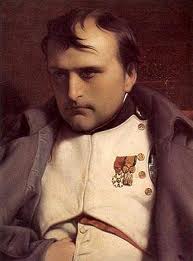
Napoleon once said, “When I realized that men were willing to die for bits of colored ribbon, I knew I could rule the world.” It’s a wholly cynical sentiment but Napoleon was famous for creating and distributing military awards, citations, ribbons, medals, and orders. And for many years, it worked — his troops were highly motivated.
Several hundred years after Napoleon, Tony Blair said something quite similar (though I can’t find the exact quote). A journalist noted
Over to you, Tony.
that Blair was quite the egalitarian and asked if he might not abolish the English system of knighthoods and lordships. Blair responded (more or less), “You must be joking. The system is the most productive, least costly innovation engine in the world. It’s amazing how hard people will work for a tap on the shoulder from the Queen.”
Surprised that the English and the French might agree on something? Perhaps they’re on to something. The moral of the story is that praise and recognition can motivate people even more than money can. I’m surprised that we don’t use it more. I’ve seen far too many managers who are slow to recognize achievements and grudging with their compliments. I’m surprised because, as Tony Blair notes, praise is an inexpensive and productive way to motivate people.
Here’s an experiment. Ask a married couple what percentage of the house work each one does. Ask them separately so one doesn’t hear the other’s answer. Add the two percentages together. Almost certainly, the sum will be greater than 100%. Why? Because each member of the couple has a very good subjective sense of how hard they work. On the other hand, they don’t have that same sense for the other member of the couple. Each one knows how hard they work. It’s quite common that each one feels they deserve more recognition.
Similarly, after a complex project is concluded, ask each member of the team, “What percentage of the value did you personally deliver?” (Again, ask them separately). If the project team has six or more members, when you sum the responses the answer will very likely be greater than 200%. Each person has an inflated sense of how much they contributed.
As a manager, what should you do? The simple answer is to give more praise than you think is absolutely necessary. In fact, give about twice as much as you would normally do. After all, the French and English can’t both be wrong.


