Strategy. Innovation. Brand.
Is Big Data The Death Of Strategy?

More efficient. Not more competitive.
Why is milk always at the back of the grocery store? Because of the precursor of Big Data. Let’s call it Little Data.
Retailers have always studied their customers’ behavior. An astute observer is just as valuable as mountains of data. In the era of Little Data, grocers noticed that shoppers usually waited until they needed several items before going to the store. Milk was different, however. If a household were out of milk, a family member would go to the store for the express purpose of buying milk – and only milk.
Once grocers noticed this, they moved the milk to the back of the store. Shoppers who came in only for milk might notice several other things they needed (or wanted) on the trip through the store. Rather than buying one item, they might buy half a dozen. By relocating the milk, the grocer could sell more.
What happened next is instructive. Once one grocer figured out the pattern and moved the milk to the back, all other grocers followed suit. I’ve verified this in at least a dozen countries. The milk is always at the back. No grocer can establish a competitive advantage by putting the milk at the back of the store.
What does this have to do with strategy? I’ve always subscribed to Michael Porter’s insights on the difference between operational effectiveness and strategy. In his classic article, What Is Strategy?, Porter defines operational effectiveness as doing the same things as competitors but doing them better. Strategy, on the other hand, means, “… preserving what is distinctive about a company. It means performing different activities from rivals or performing similar activities in different ways.”
In the era of Little Data, we could figure out simple things like how consumers buy milk. Now, in the era of Big Data, we can identify much more subtle patterns in much greater detail. However, the underlying dynamic doesn’t change. Once one company figures out a new pattern, every one of its competitors can also implement it. As Porter points out, “…the problem with operational effectiveness is that best practices are easily emulated. … competition produces absolute improvement in operational effectiveness, but relative improvement for no one.”
Big Data, then, is about operational effectiveness, not strategy. Yet when I read about Big Data in management journals, I sense that it’s being treated as strategic weapon. It’s not. Companies may have to invest in Big Data to keep up with the Joneses but it’s never going to be a fundamental differentiator or a strategic advantage. It’s time for Big Companies to wise up about Big Data.
Which Companies Are The Most Innovative?

Change Is Coming
Last week, I wrote about which countries are the most innovative. (Hint: Switzerland and Sweden topped the list). This week, let’s discuss which companies are the most innovative.
Boston Consulting Group (BCG) just published their eighth annual compilation of the most innovative companies in the world. BCG collected data from 1,500 executives and rated and ranked the 50 companies that are deemed the most innovative.
Innovation continues to be a very high profile objective. Over three-fourths (77%) of the respondents noted that innovation was among the top three strategic imperatives for their respective companies. This is a steady upward trend since a low point of 64% in 2009, when companies presumably had other things on their mind. This trend seems to match a similar “return to innovation” trend at the national level.
So which companies are the most innovative? Apple continues to claim the top spot but Samsung has leapfrogged over Google to stake a strong number two position. Samsung has built an innovation culture around the slogan, “Change everything but your spouse and your children.” As BCG reports, building a culture that emphasizes and accepts change is one of the keys to success.
High tech companies take six of the top ten positions. In addition to Apple, Samsung, and Google in the top three slots, Microsoft is fourth, IBM is sixth, and Amazon is seventh.
The presence of top tech companies is not a big surprise. The bigger surprise for me was that three car companies vaulted into the top 10: Toyota is fifth, Ford is eighth, and BMW is ninth. Perhaps even more impressive is that car companies accounted for nine of the top 20 slots. GM is 13th, VW is 14th, and Hyundai, Honda, Audi, and Daimler take positions 17 through 20.
BCG suggests that three major factors are pushing the car companies towards greater innovation. First, “…manufacturers are racing to meet higher fuel-efficiency standards”. Second, many companies are investigating and experimenting with electric vehicles. Third, “…safety standards continue to rise”.
What causes companies to be innovative? Based on this year’s crop of leaders, BCG notes that there are five critical factors. I’ll write more about these in the future but here’s a first take:
- Top management is committed to – and fosters a culture of – innovation as a competitive advantage. Like Samsung, the leaders of the leading companies push hard for innovation.
- They leverage their intellectual property. They understand the rules of the IP game and they manage – sometimes buying, sometimes selling – complex portfolios of patents and other intellectual property.
- They manage a portfolio of innovative projects. They generally guide multiple projects simultaneously. Some are world changers; others are incremental enhancements. Management understands the project process and has a good sense of when to fish and when to cut bait.
- They have a strong customer focus. They continually ask the question, “What’s good for the customer?”
- They develop “strong processes, which lead to strong performance”. They often have standardized processes that require inter-disciplinary leaders to make conscious decisions about where to invest (and where not to).
Brain Networks At The Office
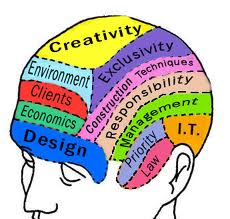
Quick! Activate the default network!
When you’re “zoned out”, your brain’s default network kicks in and processes stuff. What kind of stuff? Well, not new stuff because you’re zoned out and no new stuff is coming in. You’ve unhooked yourself from the grid and the only thing your brain can work on is stuff that’s already in your brain. It’s like mentally chewing your cud.
It turns out the default network contributes in very important ways to creativity. As Adam Waytz and Malia Mason point out in a recent issue of Harvard Business Review, the default network is “… responsible for one of our most prized abilities: transcendence. The capacity to envision what it’s like to be in a different place, a different time, a different person’s head, or a different world altogether is unique to humans….”
To create creative environments, managers are beginning to realize the importance of allowing employees to “unhook” and activate their default networks. Unfocused free time is critical to creative thinking and innovation. As I’ve pointed out before, too much focus can kill creativity. Waytz and Mason point out that many of the “creative time off” programs at companies like Google may still miss the mark. They focus on quantity of time off, rather than quality. The authors argue that it may be better to focus on “total detachment” rather than the number of days off. The idea is to “unfocus” and activate the default network rather than to shift focus to a project of personal interest.
In addition to the default network, Waytz and Mason identify three other brain networks that can contribute to improved performance and productivity. These are: the reward network, the affect network, and the control network. Let’s look at the reward network today. We’ll visit the affect and control networks tomorrow.
Waytz and Mason compare the reward network to a hedonometer, a hypothetical instrument that could “…measure the amount of pleasure or displeasure we feel in response to any stimulus”. The reward network “…reliably activates in response to things that evoke enjoyment and deactivates in response to things that reduce enjoyment”.
In animals, the reward network activates when the animal encounters something– like food or water — that has clear survival value. The same is true of humans. But there’s more to the human reward system. Unlike animals, the human reward system activates for “secondary” rewards – those that have no direct survival value.
Money is clearly an important secondary reward, but numerous, non-monetary secondary rewards also exist. Some are obvious, like status and recognition. Others are less obvious, like fairness. Waytz and Mason argue that employees’ reward systems light up when they perceive their organization to be fair. When the organization is perceived to be unfair, the reward system dims and employees lose motivation. This is true both for employees who benefit from the unfairness and for those who suffer from it. As Waytz and Mason put it, “A fair environment is a reward to people regardless of their standing”.
So how do you fine tune the reward system? Both fairness and transparency are important. Somewhat surprisingly, so is the expectation of learning. When employees expect that they will learn something, the reward system activates and motivation rises. Goals are also important but Waytz and Mason argue that broad goals that provide employees some room to maneuver activate the reward network more effectively than narrowly defined, overly stringent goals that leave little room for judgment.
And what about money? Well, it can be useful. But Waytz and Mason conclude that, “Any number of things employers can do ‘on the cheap’—fostering a culture of fairness and cooperation, offering opportunities for people to engage their curiosity, and providing plenty of social approval—will motivate employees as much if not more [than money]”. So think about money in your reward structure … but not too much.
Beware The Toy That Destroys
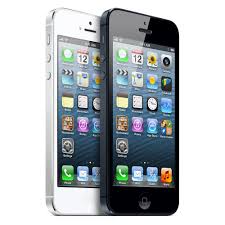
It’s just a toy.
As Clayton Christensen pointed out more than a decade ago, disruptive technologies are often seen as inferior to the technologies they replace. Leading companies can easily dismiss them as toys and ignore them. That’s when the trouble starts.
We’ve seen two examples of this phenomenon in the last week. The first is BlackBerry. Just four years ago, the company had 51% of the North American market for smartphones. Today, it has 3.4%.
There are, of course, many factors behind the decline, but I’d have to guess that the iPhone is the primary disrupter. Here’s how the New York Times describes BlackBerry’s response to the iPhone, “…BlackBerry insiders and executives viewed the iPhone as more of an inferior entertainment device than a credible smartphone, particularly for users in BlackBerry’s base of government and corporate users.”
In other words, BlackBerry dismissed the iPhone as a toy. In fact, long-time readers of this website will remember that BlackBerry actually used the word “toy” in one of its ad campaigns. BlackBerry users, the ad claimed, needed “tools, not toys”. That’s when I concluded that BlackBerry’s future was dismal.
The second example this week is the Washington Post. The Post used to be one of the most influential newspapers in the world. But somehow it missed the Internet wave. I’m guessing that executives at the Post once dismissed the Internet as nothing more than fluff and entertainment. No self-respecting citizen would get serious news and analysis from such a source. It was a toy. It could be ignored.
Now, of course, Jeff Bezos has bought the Post for $250 million. (Critics say he overpaid by a factor of two or three). I admire the Post and I hope that Bezos can help save it. But I can’t imagine how. The Internet has already thoroughly disrupted the Post’s business model.
In an entirely different arena, I see another disruption looming. In higher education, Massively Open Online Courses (MOOCs) threaten to disrupt the genteel world of higher education. Why pay $50,000 a year for a college education when you can get it virtually free on the Internet?
Some leading colleges, of course, are jumping on the MOOC bandwagon and experimenting with different offerings. Other colleges seem to be dismissing MOOCs as inferior “toys”. Just look at what MOOCs don’t offer: a campus, buildings, athletics, football, school spirit, dormitories, etc. But perhaps that’s no longer what customers want. Brick-and-mortar colleges may not crash as fast as BlackBerry did but, if they dismiss MOOCs as toys, their future is just as dismal.
Understanding the Railroad Cliché

Tax collector.
It’s become a cliché that the problem with railroad companies is that they defined themselves as railroad companies. When other forms of transportation came along, railroad executives missed the opportunity to become multi-modal transportation companies. They boxed themselves out of the next growth industry.
I’ve often heard executives mention railroads as a cautionary tale: don’t define your business too narrowly. Indeed, the idea has become a meme that seems to live independently of us. Like a virus, it simply replicates and spreads.
I didn’t know where this particular meme came from, so I decided to track it down. By tracing where the insight came from and how it developed, I thought I could learn more about how to avoid disruption.
I found the originating article fairly quickly: “Marketing Myopia” by Theodore Levitt published in Harvard Business Review in 1960. I’m sure I’ve read the article before but I don’t remember when. The meme simply planted itself in my head and lived on without further cultivation.
What else did Levitt have to say? Essentially that businesses exist to solve problems for their customers. Too many businesses become enamored of their technology and their production processes and put the customer at the end of the chain rather than at the beginning.
Levitt uses the petroleum industry as a running example of the problem. As he saw it, oil companies define themselves as oil companies, not as energy companies. They focus on finding, extracting, and refining oil and don’t really understand their customers’ issues.
Levitt points out that people don’t like buying gasoline. It’s an interruption and an inconvenience and how can you really tell if you’re getting good gas or not? He writes, “What [people] buy is the right to continue driving their cars. The gas station is like a tax collector….” Levitt predicted that a new technology – probably fuel cells – would soon make it easier to continue driving our cars and that oil companies would be in dire straits.
Levitt also warned that technical research would not protect companies from obsolescence. Technical research tends to focus on improving something that already exists. The issue is that something that doesn’t exist comes along to disrupt existing industries. Fall in love with your technology and you’ll be blinded to the threat.
Similarly, mass production is like a drug. Too many executives believe that they can solve most any problem by scaling up and reducing unit costs. But that simply lowers the cost of something that customers don’t want.
As Levitt writes, it’s ultimately about the customer, “Selling focuses on the needs of the seller, marketing on the needs of the buyer.” Rather than focusing on technology, products, and production, a marketing-oriented company focuses on “satisfying the needs of the customer by means of the product and the whole cluster of things associated with creating, delivering, and, finally, consuming it.”
Ultimately, marketing is not about making the product attractive to the customers. It’s about making products that attract customers. When we use the railroad cliché, we sometimes forget that. We may think about definitions and imagination. But it’s really about understanding and it begins with the customer.
My Social Media


